In today’s hyper-connected business world, a CRM based platform isn’t just a luxury—it’s a necessity. From boosting customer retention to streamlining sales pipelines, the right system can transform how you engage, convert, and grow.
What Is a CRM Based Platform?

A CRM based platform, or Customer Relationship Management platform, is a centralized software solution designed to manage all your company’s interactions with current and potential customers. It consolidates data from various channels—email, phone, social media, and website activity—into a single, accessible hub.
Core Definition and Functionality
At its heart, a CRM based platform tracks customer data, manages communications, and automates workflows to improve business relationships. It acts as the central nervous system of your customer-facing operations, ensuring no lead slips through the cracks and every interaction is recorded and actionable.
- Stores contact information, interaction history, and purchase behavior.
- Automates follow-ups, task assignments, and lead scoring.
- Integrates with email, calendars, and marketing tools for seamless operations.
Evolution from Traditional to Modern CRM
Early CRM systems were clunky, on-premise databases used primarily by sales teams. Today’s CRM based platform is cloud-native, AI-powered, and accessible across devices. The shift from static databases to dynamic, real-time engagement engines has revolutionized customer experience.
According to Gartner, modern CRM platforms now serve as strategic assets, not just operational tools, influencing everything from product development to customer service.
“CRM is no longer just about managing contacts—it’s about managing relationships at scale with intelligence and empathy.” — Forrester Research
Key Features of a CRM Based Platform
The strength of a CRM based platform lies in its comprehensive feature set. These tools are engineered to eliminate silos, enhance visibility, and drive efficiency across departments.
Contact and Lead Management
One of the foundational features of any CRM based platform is its ability to organize and manage contacts and leads. Instead of scattered spreadsheets or forgotten email threads, every lead is captured, categorized, and nurtured systematically.
- Automated lead capture from web forms, social media, and landing pages.
- Lead scoring based on engagement, demographics, and behavior.
- Duplicate detection and data enrichment for cleaner databases.
Platforms like Salesforce Sales Cloud offer intelligent lead routing, ensuring high-potential prospects are prioritized and assigned to the right sales reps instantly.
Sales Pipeline and Forecasting Tools
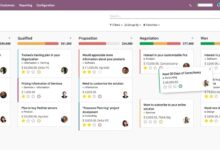
A CRM based platform provides a visual representation of your sales funnel, allowing teams to track deals from initial contact to close. This transparency improves forecasting accuracy and helps managers identify bottlenecks.
- Drag-and-drop pipeline stages for intuitive deal tracking.
- Real-time dashboards showing conversion rates and revenue projections.
- Predictive analytics to forecast sales based on historical trends.
For example, HubSpot’s CRM offers forecasting tools that sync with calendar events and email activity to predict deal closures with up to 85% accuracy, according to internal case studies.
Marketing Automation Integration
Modern CRM based platforms don’t operate in isolation. They integrate seamlessly with marketing automation tools to deliver personalized campaigns at scale.
- Triggered email sequences based on user behavior (e.g., abandoned cart).
- Segmented audience lists for targeted campaigns.
- UTM tracking and campaign performance analytics.
Marketo and Pardot, both integrated with CRM systems like Salesforce, enable businesses to launch multi-channel campaigns that adapt in real time based on customer engagement.
Benefits of Using a CRM Based Platform
Implementing a CRM based platform delivers measurable ROI across multiple business functions. From sales acceleration to enhanced customer satisfaction, the advantages are both strategic and operational.
Improved Customer Relationships
With a 360-degree view of each customer, teams can deliver more personalized and timely interactions. A CRM based platform remembers past purchases, support tickets, and communication preferences, enabling empathetic service.
- Reduces response time to customer inquiries by up to 60%.
- Enables personalized recommendations based on purchase history.
- Tracks customer sentiment through integrated feedback tools.
According to a Nucleus Research report, companies using CRM see a 34% improvement in customer satisfaction scores within the first year of deployment.
Increased Sales Efficiency
Sales teams spend less time on administrative tasks and more time selling. Automation of follow-ups, meeting scheduling, and data entry frees up valuable hours.
- Reduces manual data entry by up to 45%.
- Automates proposal generation and contract sending.
- Provides AI-driven insights on optimal call times and messaging.
For instance, Zoho CRM’s AI assistant, Zia, analyzes email tone and suggests better phrasing to increase reply rates, boosting outreach effectiveness by 27% on average.
Better Data Accuracy and Reporting
Human error in spreadsheets is a major cause of lost opportunities. A CRM based platform enforces data consistency and provides real-time reporting dashboards.
- Centralized data reduces duplication and outdated records.
- Customizable reports for sales, marketing, and service KPIs.
- Role-based access ensures data integrity and compliance.
Tableau integration with CRM platforms like Microsoft Dynamics 365 allows for advanced data visualization, helping executives make data-driven decisions faster.
Types of CRM Based Platforms
Not all CRM based platforms are created equal. They come in different models tailored to specific business needs, deployment preferences, and scalability requirements.
Operational CRM
Operational CRM focuses on automating core customer-facing processes like sales, marketing, and service. It’s ideal for businesses looking to streamline day-to-day operations.
- Automates lead-to-cash workflows.
- Manages service requests and ticketing systems.
- Supports omnichannel customer engagement (phone, email, chat).
Salesforce Service Cloud is a prime example, offering case management, knowledge bases, and live chat integration to enhance support efficiency.
Analytical CRM
Analytical CRM is designed for data analysis and customer insights. It processes data collected by operational systems to uncover patterns, predict behavior, and optimize strategies.
- Uses data mining and machine learning to segment customers.
- Identifies churn risks and upsell opportunities.
- Generates customer lifetime value (CLV) predictions.
Google Analytics 360 integrated with a CRM based platform can track user journeys across platforms, providing deep behavioral insights for marketing optimization.
Collaborative CRM
Also known as customer-facing CRM, collaborative CRM enhances communication between departments and with customers. It ensures that sales, marketing, and support teams share the same information.
- Enables shared access to customer interaction logs.
- Integrates with collaboration tools like Slack and Microsoft Teams.
- Supports customer self-service portals and community forums.
Zendesk, when paired with a CRM, allows support agents to view a customer’s entire history, reducing resolution time and improving satisfaction.
Top CRM Based Platforms in 2024
The market is flooded with CRM solutions, but only a few stand out for their robustness, scalability, and innovation. Here are the top CRM based platforms dominating the landscape in 2024.
Salesforce: The Industry Leader
Salesforce remains the gold standard in CRM based platforms, powering over 150,000 companies worldwide. Its Einstein AI engine delivers predictive insights, while its AppExchange offers thousands of integrations.
- AI-powered sales forecasting and lead scoring.
- Highly customizable with low-code development tools.
- Strong ecosystem for third-party apps and plugins.
Learn more at salesforce.com.
HubSpot: Best for SMEs and Startups
HubSpot offers a user-friendly, all-in-one CRM based platform that’s perfect for small to mid-sized businesses. Its free tier provides essential features, making it accessible for growing teams.
- Free CRM with marketing, sales, and service hubs.
- Intuitive interface with drag-and-drop automation builders.
- Excellent onboarding and educational resources.
Explore HubSpot at hubspot.com.
Microsoft Dynamics 365: Enterprise Powerhouse
For large enterprises already using Microsoft products, Dynamics 365 offers deep integration with Office 365, Azure, and Power BI. It’s a scalable solution for complex organizational structures.
- Seamless integration with Outlook, Teams, and Excel.
- Advanced AI and machine learning capabilities.
- Comprehensive ERP and CRM convergence.
Visit dynamics.microsoft.com for details.
How to Choose the Right CRM Based Platform
Selecting the right CRM based platform requires careful evaluation of your business goals, team size, budget, and technical capabilities. A poor fit can lead to low adoption and wasted investment.
Assess Your Business Needs
Start by identifying your primary pain points. Are you struggling with lead follow-up? Do you lack visibility into sales performance? Define your objectives before evaluating features.
- Map out key workflows (e.g., lead capture, onboarding, support).
- Determine which departments will use the CRM (sales, marketing, service).
- Identify must-have features vs. nice-to-have add-ons.
Consider Scalability and Integration
Your CRM based platform should grow with your business. Ensure it can handle increased data volume, user count, and feature expansion.
- Check API availability for custom integrations.
- Verify compatibility with existing tools (e.g., email, e-commerce, accounting).
- Look for modular pricing that scales with usage.
For example, Zoho CRM offers tiered plans that scale from startups to global enterprises, with over 40 built-in integrations.
Evaluate User Experience and Support
No matter how powerful a CRM based platform is, it’s useless if your team won’t use it. Prioritize ease of use, mobile access, and training resources.
- Request a free trial or demo to test usability.
- Check customer reviews on sites like G2 and Capterra.
- Assess the quality of onboarding, documentation, and customer support.
HubSpot, for instance, offers a free CRM academy with certifications, helping teams get up to speed quickly.
Implementation Best Practices for CRM Based Platforms
Even the best CRM based platform can fail without proper implementation. A strategic rollout ensures high adoption, data integrity, and long-term success.
Data Migration and Cleansing
Moving data from legacy systems requires careful planning. Poor data quality can undermine trust in the new system.
- Remove duplicates, outdated entries, and incomplete records.
- Standardize formats (e.g., phone numbers, addresses).
- Use ETL (Extract, Transform, Load) tools for smooth migration.
Tools like Talend and Stitch can automate data pipelines, reducing errors during transfer.
Team Training and Change Management
Resistance to change is a common barrier. Engage stakeholders early and provide ongoing training.
- Conduct workshops and role-based training sessions.
- Appoint CRM champions within each department.
- Communicate benefits clearly—how it makes their jobs easier.
According to McKinsey, companies that invest in change management see 3x higher adoption rates for new technologies.
Continuous Optimization and Feedback Loops
A CRM based platform is not a “set and forget” tool. Regular reviews ensure it evolves with your business.
- Schedule quarterly audits of workflows and reports.
- Collect user feedback to identify pain points.
- Update automation rules and dashboards based on changing goals.
Use built-in analytics to track login rates, feature usage, and data entry completeness as KPIs for system health.
Future Trends in CRM Based Platforms
The CRM landscape is evolving rapidly, driven by AI, automation, and customer expectations. Staying ahead of trends ensures your platform remains competitive and effective.
AI and Predictive Analytics
AI is no longer a futuristic concept—it’s embedded in today’s CRM based platforms. From chatbots to predictive lead scoring, artificial intelligence is making systems smarter.
- AI-powered virtual assistants handle routine inquiries.
- Predictive analytics forecast customer behavior and churn.
- Natural language processing (NLP) extracts insights from emails and calls.
Salesforce’s Einstein AI can predict which leads are most likely to convert, increasing sales efficiency by up to 30%.
Mobile-First and Remote Accessibility
With remote work here to stay, mobile CRM access is essential. Sales reps and support agents need real-time data on the go.
- Native mobile apps with offline capabilities.
- Push notifications for urgent tasks and updates.
- Mobile-friendly dashboards and reporting.
HubSpot and Zoho offer robust mobile apps that sync seamlessly with desktop versions, ensuring continuity across devices.
Hyper-Personalization and Customer Journey Mapping
Customers expect personalized experiences. Modern CRM based platforms use journey mapping to deliver the right message at the right time.
- Tracks every touchpoint across channels (web, email, social).
- Delivers dynamic content based on user behavior.
- Uses real-time triggers to send personalized offers.
Adobe Experience Cloud integrates with CRM systems to create immersive, data-driven customer journeys that increase conversion rates by up to 40%.
What is a CRM based platform?
A CRM based platform is a software system that helps businesses manage customer interactions, streamline processes, and improve profitability by centralizing customer data and automating workflows.
What are the main benefits of using a CRM based platform?
Key benefits include improved customer relationships, increased sales efficiency, better data accuracy, enhanced reporting, and streamlined marketing automation.
Which CRM based platform is best for small businesses?
HubSpot CRM is widely regarded as the best for small businesses due to its free tier, ease of use, and comprehensive feature set tailored to startups and SMEs.
How much does a CRM based platform cost?
Costs vary widely—from free (HubSpot) to $300+ per user/month (enterprise Salesforce). Most platforms offer tiered pricing based on features and user count.
Can CRM based platforms integrate with other tools?
Yes, most modern CRM based platforms offer extensive integrations with email, marketing automation, e-commerce, and ERP systems via APIs and native connectors.
Choosing the right CRM based platform is one of the most strategic decisions a business can make. From enhancing customer relationships to driving sales growth, these systems are the backbone of modern customer-centric operations. As technology evolves, platforms are becoming smarter, more intuitive, and more integrated than ever. Whether you’re a startup or a global enterprise, investing in a robust CRM based platform is no longer optional—it’s essential for survival and success in today’s competitive landscape.
Recommended for you 👇
Further Reading:
